Vacuum casting, a versatile manufacturing process, holds significant potential when combined with other manufacturing techniques. As a dedicated vacuum casting supplier, I’ve witnessed firsthand the remarkable outcomes that can be achieved through such integrations. In this blog, I’ll explore various ways vacuum casting can be paired with other manufacturing processes, shedding light on the benefits, applications, and considerations involved. Vacuum Casting

Compatibility with 3D Printing
One of the most common and effective combinations is between vacuum casting and 3D printing. 3D printing is renowned for its ability to quickly produce complex and customized master patterns. These patterns serve as the foundation for vacuum casting. By using 3D – printed masters, we can rapidly create the molds required for vacuum casting.
The process begins with the design and 3D printing of a master pattern. This pattern should accurately represent the final part’s shape and features. Once the master is printed, it is then used to create a silicone mold through a vacuum – assisted process. The silicone mold can then be used in vacuum casting to produce multiple copies of the part.
The benefits of this combination are numerous. Firstly, 3D printing allows for rapid prototyping. Designers can quickly iterate on a design, print a new master pattern, and then use it for vacuum casting to test the physical form and function of the part. This saves a significant amount of time compared to traditional manufacturing methods.
Secondly, 3D printing can produce highly detailed and intricate master patterns that would be difficult or impossible to create using other means. These details are then transferred to the vacuum – cast parts, resulting in high – quality, accurate components. For example, in the jewelry industry, 3D – printed master patterns with delicate designs can be used to create multiple copies of unique pieces through vacuum casting.
Integration with CNC Machining
CNC machining is another manufacturing process that pairs well with vacuum casting. CNC machining is ideal for creating high – precision master patterns or components that require tight tolerances. These precision parts can be used as inserts or reference points within the vacuum – casting process.
For instance, in the automotive industry, where parts must meet strict quality and performance standards, CNC – machined components can be incorporated into vacuum – cast parts. A CNC – machined metal insert can be placed inside a silicone mold during the vacuum – casting process. The liquid resin is then poured into the mold, encapsulating the insert and creating a hybrid part that combines the strength of the metal insert with the flexibility and cost – effectiveness of the vacuum – cast material.
The combination also offers the advantage of material diversity. CNC machining can work with a wide range of materials, including metals, plastics, and composites. By adding CNC – machined components to vacuum – cast parts, we can take advantage of the unique properties of each material. For example, a CNC – machined aluminum component can be integrated with a vacuum – cast polyurethane part to create a lightweight yet strong product.
Combining with Injection Molding
Injection molding is a well – established mass – production method. While vacuum casting is more suitable for small – to medium – scale production, it can complement injection molding in several ways.
For new product development, vacuum casting can be used in the prototyping phase. It allows designers and engineers to produce a small number of functional prototypes for testing and validation. Once the design is finalized, injection molding can be implemented for large – volume production.
Another way vacuum casting and injection molding can be combined is in the production of complex parts. Some parts may have features that are difficult to mold using injection molding alone. Vacuum casting can be used to create these complex features separately and then integrate them with injection – molded components. This hybrid approach can reduce the cost and complexity of the overall manufacturing process.
Advantages of Combining Vacuum Casting with Other Processes
The combination of vacuum casting with other manufacturing processes offers several key advantages.
Cost – Effectiveness
In many cases, using a combination of processes can be more cost – effective than relying on a single method. For example, 3D printing for master pattern creation is often more affordable than traditional machining methods, especially for complex or low – volume designs. Vacuum casting can then be used to produce multiple copies from the 3D – printed master at a relatively low cost per part.
Faster Time – to – Market
As mentioned earlier, the combination of processes like 3D printing and vacuum casting enables rapid prototyping. This shortens the product development cycle, allowing companies to bring new products to market more quickly. In today’s fast – paced business environment, this can be a significant competitive advantage.
Enhanced Product Quality
By leveraging the strengths of different manufacturing processes, we can produce higher – quality products. For example, the precision of CNC machining can be combined with the flexibility and surface finish of vacuum casting to create parts that meet the most demanding quality standards.
Customization
Combining processes allows for greater customization. Designers can mix and match materials, shapes, and features to create unique products that meet specific customer requirements. This is particularly important in industries such as aerospace, medical devices, and consumer electronics, where customization is highly valued.
Considerations When Combining Processes
While the combination of vacuum casting with other manufacturing processes offers many benefits, there are also some considerations to keep in mind.
Process Compatibility
Not all processes are compatible with each other. For example, the materials used in one process may not be compatible with the chemicals or temperatures involved in another process. It’s essential to carefully select the processes and materials to ensure they work well together.
Quality Control
When multiple processes are involved, quality control becomes more complex. Each process introduces its own set of potential defects and variations. It’s crucial to have a comprehensive quality control system in place to monitor and ensure the quality of the final product.
Production Planning
Combining processes requires careful production planning. The order in which the processes are carried out, the lead times for each process, and the availability of resources all need to be carefully coordinated to ensure a smooth and efficient production process.
Applications of Combined Processes
The combined use of vacuum casting and other manufacturing processes has a wide range of applications across various industries.
Automotive Industry
In the automotive industry, vacuum casting can be combined with CNC machining and injection molding to produce parts such as dashboards, interior trim, and custom – made engine components. The ability to quickly prototype and then mass – produce high – quality parts is crucial for automotive manufacturers.
Medical Field
Medical device manufacturers often use a combination of 3D printing and vacuum casting to create customized prosthetics, surgical tools, and patient – specific models. These processes allow for rapid development and production of devices that meet the unique needs of patients.
Consumer Goods
For consumer goods, the combination of vacuum casting with other processes enables the creation of unique and innovative products. For example, in the electronics industry, vacuum – cast parts can be integrated with CNC – machined metal enclosures to produce stylish and functional devices.
Conclusion
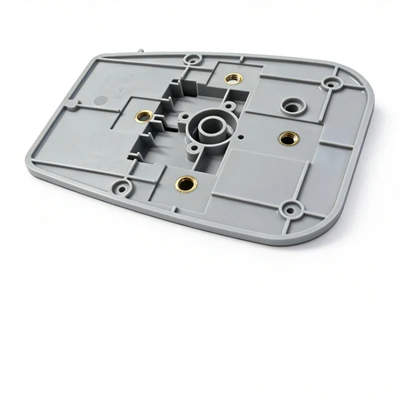
In conclusion, vacuum casting can indeed be effectively combined with other manufacturing processes. Whether it’s 3D printing, CNC machining, injection molding, or other methods, these combinations offer significant benefits in terms of cost, time – to – market, quality, and customization. As a vacuum casting supplier, I’m excited about the endless possibilities that these combinations present.
Molding Services If you’re interested in exploring how vacuum casting can be integrated with other manufacturing processes for your project, I invite you to reach out to me for a detailed discussion. Let’s work together to find the best manufacturing solution for your specific needs.
References
- Gibson, I., Rosen, D. W., & Stucker, B. (2010). Additive Manufacturing Technologies: Rapid Prototyping to Direct Digital Manufacturing. Springer.
- Groover, M. P. (2010). Fundamentals of Modern Manufacturing: Materials, Processes, and Systems. Wiley.
- Campbell, I. M., Evans, G. M., & Duncan, A. (2004). Manufacturing Engineering & Technology. Pearson Prentice Hall.
Dongguan Xinchuan Precision Manufacturing Co., Ltd.
As one of the most professional vacuum casting manufacturers and suppliers in China, we offer a quick lead time for customized orders. Please feel free to buy precision vacuum casting made in China here from our factory. Contact us for quotation.
Address: #16 Gangjian Road, Changping Town, Dongguan City, Guangdong, China. 523000
E-mail: FreeQuote@xcprecision.com
WebSite: https://www.xcprecisions.com/
