Hey there! If you’re in the market for PE shrink film—whether you’re packaging pallets of goods, securing retail products, or wrapping equipment—you know how crucial thickness is. Too thin, and it’ll tear during shipping or fail to hold your load tight. Too thick, and you’re wasting money on extra material that doesn’t do any extra work. As a PE shrink film supplier, I’ve seen so many folks struggle with measuring thickness correctly—sometimes they get numbers that don’t match the specs, other times they’re using methods that are way off. Today, I’m breaking down exactly how to measure PE shrink film like a pro, no fancy lab gear required, and why this matters for your business. PE Shrink Film
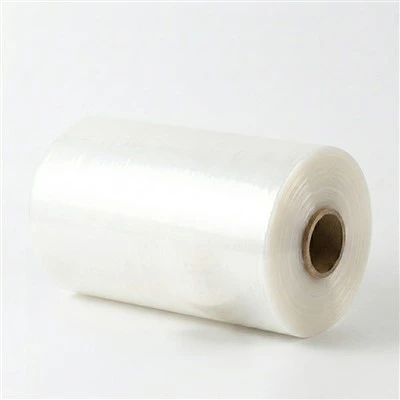
First, let’s get one thing straight: thickness isn’t the same as gauge, even though most people use the two interchangeably. Gauge is the standard unit for film thickness in the US, right? One gauge equals 0.001 inches. So a 100-gauge film is 0.1 inches thick, a 200-gauge is 0.2, and so on. But wait—metric users, don’t zone out! We also talk in micrometers (μm) sometimes, where 1 inch = 25,400 μm, so 100-gauge is ~25.4 μm. The problem? A lot of suppliers (including us) list both because different industries prefer different units. But when you’re measuring, you need to stick to one unit to avoid confusion—mixing gauge and μm will give you wrong numbers, fast.
Now, the most common tool people use for this is a micrometer. I get it, it’s the go-to, but so many folks use it wrong for film. A micrometer looks like a C-shaped tool with a spindle that you twist to close around the film, and a scale that shows the thickness. But if you just clamp the film between the spindle and anvil too hard, you’ll compress the film and get a way smaller number than the actual thickness. PE shrink film is flexible, so over-clamping is a huge mistake. The rule here is gentle pressure—you just want the jaws to touch the film, not squeeze it flat.
Here’s how to do it right with a micrometer: first, make sure your micrometer is calibrated. A lot of people skip this step, but if your tool’s off by even a little, your measurements are garbage. Calibrate it with a precision “standard block” that’s the exact thickness you know is right. Then, cut a small piece of film—like 2×2 inches is perfect. Don’t just measure one spot, though. Shrink film isn’t always perfectly uniform; thickness can vary a tiny bit along the roll, especially if it’s been sitting around in a warm warehouse (heat can stretch or compress the edges). So measure at least 5 different spots on the film sample: the center, the left edge, the right edge, and two random spots in between. Write down each number, then calculate the average. That average is your real thickness. For example, if your 5 measurements are 102, 98, 100, 101, and 99 gauge, the average is 100 gauge. That’s the number you should go by, not any single spot.
Wait, what if you don’t have a micrometer? A lot of small businesses or even on-site quality checks might not have one. Then there’s a method called the “weighing method” that’s super simple, no fancy tools needed. Here’s how it works: you need a small scale that can measure light weights accurately (like a gram scale, not a bathroom scale). First, cut a perfect square of film—say, 10 cm by 10 cm. That’s a 100 square centimeter sample. Weigh it in grams. Then, you use a simple formula to calculate thickness. Let’s break the formula down so it’s not scary: thickness (in micrometers) = (weight of sample in grams) / (area of sample in square centimeters) / (density of PE in g/cm³). What’s the density of PE? Most PE shrink film is low-density polyethylene (LDPE) or linear low-density polyethylene (LLDPE), both have a density around 0.92 g/cm³. So plug that number in, and you’re set.
Let’s test that with an example to make it real. Suppose I cut a 10×10 cm sample, weigh it, and it’s 0.23 grams. Then thickness = 0.23 / 100 / 0.92. Let’s do the math: 0.23 divided by 100 is 0.0023, divided by 0.92 is 0.0025 cm. Convert that to micrometers: 1 cm = 10,000 μm, so 0.0025 cm x 10,000 = 25 μm, which is about 100 gauge (since 25.4 μm = 100 gauge). That checks out! This method is great if you’re on the go—no micrometer needed, just a scale and a ruler to cut the sample. Pro tip: make sure you cut the sample as accurately as possible. If your square is 10.1 cm instead of 10, the area is off, so your weight number will be wrong. Double-check your measurements with a tape measure, not a guess.
Another thing I see all the time: people measure the film when it’s stretched. Wait, no! PE shrink film is made to stretch, but when you’re measuring thickness, you have to measure it in its “relaxed” state—meaning you’re not pulling it tight. If you stretch it, you’re making it thinner, so your number will be way lower than actual. That’s a common mistake that leads people to buy thicker film than they need, because they measured a stretched sample and thought it was thinner. So when you cut your sample, just lay it flat, don’t pull it. If you’re using a micrometer, make sure you’re not holding the film tight when you clamp it.
Now, why does this even matter? As a shrink film supplier, I’ve had way too many customers come back saying “your film is too thin” or “your film is thicker than your specs.” Nine times out of ten, it’s because they measured it wrong. If you use too thin a film, you risk load damage during shipping—like pallets falling apart, products getting scratched, or even whole shipments being rejected by retailers. That costs you money in returns, replacements, and lost customers. On the flip side, if you measure wrong and buy thicker film than you need, you’re paying more for material that doesn’t add any value. For a typical pallet wrap, switching from 150 gauge to 100 gauge can cut your material cost by 30% or more, without losing any performance—if you measure correctly.
Wait, are there any other methods? Yeah, some people use a “stack method” for thin films, but that’s only for super thin stuff. Let’s say your film is 50 gauge, which is 0.05 inches. If you stack 20 layers, that’s 1 inch total, so one layer is 0.05. But wait, no—because when you stack layers, there’s air between them, so the total thickness isn’t just 20 times one layer. That method is not precise at all, so I don’t recommend it. Stick to micrometer or weighing method for accurate numbers.
Let me also talk about quality control for film rolls. When we make shrink film, we have automated thickness gauges that check every foot of the roll, so we know it’s consistent. But when you’re receiving a shipment, it’s good to do your own check because sometimes rolls can get stretched or damaged during shipping. That way, you catch any bad rolls before you use them. If your average measurement is 10% off from what we list, reach out—we’ll work with you to sort it out, because we stand behind our products.
Now, let’s clear up some myths. I heard one guy say “thicker gauge is always better.” No, that’s not true. The best thickness depends on what you’re using the film for. For example, if you’re wrapping light retail products like bottled water or small boxes, 80-100 gauge is perfect. If you’re wrapping heavy pallets with 50+ lbs of goods, you might need 120-150 gauge, maybe even 200 gauge for extra protection. If you’re using film for industrial equipment that needs moisture protection, a bit thicker is better, but still measure it right so you don’t overbuy.
Another myth: “all film of the same gauge is the same thickness.” Nope, different suppliers use different materials. Our LLDPE shrink film, for example, is more durable than LDPE film of the same gauge, so you don’t need to go thicker. That’s why it’s important to work with a supplier you trust—we test every roll so you know you’re getting exactly what we list.
Let’s wrap this up with a quick step-by-step to make it easy for you: 1. Choose your tool: micrometer (most accurate) or gram scale + ruler (no tool needed). 2. Cut a 2×2 inch (or 10×10 cm) sample, relaxed, not stretched. 3. Take at least 5 measurements, average them. 4. Compare to the specs, and if you’re off, double-check your method. If you’re still not sure, send us a sample—we can help you verify the thickness for free.
Look, measuring PE shrink film doesn’t have to be complicated. It’s just a few simple steps, and getting it right can save you a ton of money and hassle. Whether you’re a small business owner ordering your first roll, or a warehouse manager doing regular quality checks, getting accurate thickness measurements is key to choosing the right film for your needs.
If you’re shopping for PE shrink film, whether for pallet wrapping, retail packaging, or anything else, we’ve got a range of gauges and materials to fit your budget. Don’t stress about guessing—hit us up, tell me what you’re packaging, and I can help you pick the right thickness and type of film, plus share more tips to make sure it works for you. We’re here to answer any questions, no pressure, just helping you get the right product for your business.
POF Shrink Film References:
- "Plastics Materials and Processes: PE Film Thickness Measurement" – Society of Plastics Engineers
- ASTM D374-15, Standard Test Method for Thickness of Solid Electrical Insulation and Capacitor Dielectrics
- "Shrink Film Performance Guidelines" – Packaging Association of America
- "Low-Density Polyethylene (LDPE) and Linear Low-Density Polyethylene (LLDPE) Properties" – Plastics Industry Association
Shanghai Ruiyue Plastic Products Co., Ltd.
With abundant experience, we are one of the most professional pe shrink film manufacturers and suppliers in China. We warmly welcome you to buy high quality pe shrink film in stock here from our factory. If you have any enquiry about customized service, please feel free to email us.
Address: No. 1000, Lixue Road, Malu Town, Jiading District, Shanghai
E-mail: shenyang.boss@ruiyueplastics.com
WebSite: https://www.ruiyueplastics.com/
