Hey everyone, it’s Jake here—been working with cable tray roll forming lines for over a decade, and let me tell you, when people ask me what actually makes these lines tick, I always start with the control system. Because here’s the thing: a roll forming line is just a bunch of heavy metal rollers and motors if you don’t have something telling them when to move, how fast, and when to bend that steel exactly right. I’ve seen so many shops skip over good control systems and end up with wonky trays, wasted material, and downtime that costs them thousands. Today, I’m breaking down what that control system actually does, straight from the guy who installs and troubleshoots these lines for a living. Cable Tray Roll Forming Line
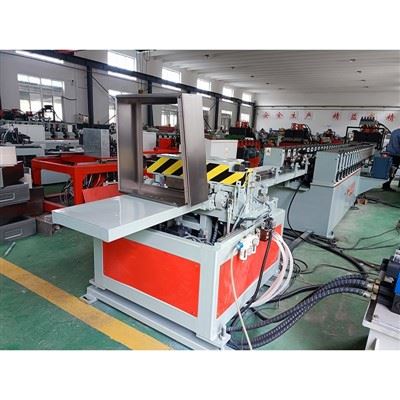
First off, let’s get real—most operators don’t pay much attention to the control system until it breaks. They just punch in a tray size, hit go, and hope it spits out perfect parts. But that control system is the brain of the whole line, not just some fancy screen you touch. Let’s start with the basics: it syncs every single part of the line at the exact same time. Think about it—your uncoiler is feeding steel sheet, right? Then it goes through a pre-punch station, then a series of roll formers that bend it into the tray shape, then a cut-off station, then maybe a stamping station for notches or mounting holes. If any of these parts are even a fraction of a second off, you get a tray that’s either too long, too short, or has holes in the wrong place. I once had a customer call me at 2 a.m. because their old line had a bad PLC— the uncoiler was feeding 2 inches too much every 10 feet, so they had 500 feet of scrap steel that night. The control system fixes that sync by using encoders and sensors along the line, tracking exactly how much material is moving every second. No more guesswork, no more manual adjustments that take an hour per run.
Next up, precision forming—this is where control systems really shine. Cable trays need super consistent bends, right? If one flange is 1mm shorter than the next, it won’t sit right when you install it, and you’ll get calls from the electricians complaining. A good control system uses servo motors on each roll stand instead of old hydraulic motors that can slip. Servos are way more accurate, and the control adjusts each roll’s position on the fly if it detects a tiny variation. For example, if the sheet coming in is a little thinner than the last batch, the control automatically tweaks the roll gap so you don’t get a weak bend that’ll collapse under the weight of cables. I’ve seen lines without good controls where operators have to stop every 50 feet to adjust rolls—cutting their production rate in half. With a solid control system, they can run 10,000 feet of tray without a single manual adjustment. That’s the difference between making $500 an hour and $1,000 an hour for your line.
Wait, and let’s not forget about material handling and waste reduction—this is a big one that most people overlook. The control system knows exactly how long each tray is supposed to be, so it triggers the cut-off blade at the exact right moment, no overcutting. It also controls the uncoiler, so it doesn’t feed more steel than needed—no loose, floppy sheet that gets caught in the rollers and causes jams. I worked with a custom installer last year who had a line with a basic control system; they were wasting 8-10% of their steel every run because of incorrect cuts and jams. We upgraded their control system, and they cut waste down to 2%—that’s huge when you’re working with galvanized steel or aluminum, which isn’t cheap. The control also tracks material usage over time, so you can see if you’re going through a roll faster than normal, which might mean it’s time to replace or grind the rolls. That’s proactive maintenance, not reactive, which saves way more money in the long run.
Oh, and safety—you can’t talk about control systems without covering this. Roll forming lines have some heavy parts: cut-off blades that move at high speeds, roll stands that spin with tons of torque. A bad control system can lead to accidents, but a good one has built-in safety features that are hard to miss. For example, if an operator reaches into the line to clear a jam, the control system will immediately stop all motors if the door to the forming area is open. Some controls have light curtains too—if something breaks the beam, the line shuts down before anyone gets hurt. I’ve been to a shop where they turned off the safety interlocks on their old line because they were a hassle, and they almost lost a finger when a glove got caught in a roll. That’s not worth it. A modern control system makes safety automatic, so operators don’t have to remember to do extra steps—it’s built in, so you don’t even think about it until it prevents a problem.
Now, let’s talk about flexibility, because that’s what customers ask me all the time: “Can this line make different tray sizes without taking all day to change over?” The control system is the answer here. Old lines used to require operators to manually adjust each roll stand, change gears for different lengths, and reprogram every station—that could take 2-3 hours to switch from a 6-inch tray to a 12-inch tray. With a good control system, you just pull up the preset on the HMI (that’s the touchscreen everyone uses now), tap a couple buttons, and it automatically adjusts all the roll positions, updates the cut-off length, and calibrates the punch stations. That changeover time drops to 10-15 minutes. I had a customer who makes a bunch of different tray sizes for different job sites—before their old control, they could only run one size a day because changeovers were such a hassle. After upgrading, they can do 6 changeovers a day, and their total output went up 30%. That’s not just convenience—that’s more revenue, because you can take more jobs.
Wait, and what about data tracking? A lot of newer control systems are connected to the cloud now, right? You can track how much the line is running, what size trays it’s making, how much material is used, even alert you if a part is going bad before it breaks. I had a customer in Chicago who uses that cloud feature—his control system sends him a text when a roller is starting to wear, so he can schedule maintenance during the night shift instead of having the line go down at 9 a.m. when he’s got a big order due. That’s a game-changer for small to mid-sized shops that can’t afford unexpected downtime. No more guessing when to replace parts, no more lost orders because your line’s out of commission.
But hold on—this isn’t to say all control systems are the same. I see a lot of budget lines out there with cheap control systems that break after a year, or can’t handle custom tray designs. The secret is getting a control system that’s built specifically for cable tray roll forming, not a generic PLC that was made for some other industry. A lot of manufacturers try to cut corners by using off-the-shelf controls, but that leads to problems down the line. For example, a generic control might not have the exact encoder settings needed for tray forming, so you get inconsistent length. Or it might not be able to handle the custom notches or mounting holes that some clients need for their specific projects. When I sell a line, I always recommend a control system that’s tailored to cable tray—we program in all the standard tray dimensions, pre-program common runs, and make it easy for operators who might not be super tech-savvy to use. I don’t want an operator staring at a screen with 50 buttons they don’t understand; I want them to be able to punch in a tray size and hit go.
I also want to bust a common myth here: some people think “the line does all the work, so the control system is just a add-on.” No way. I’ve installed lines that had great rollers and motors, but garbage control systems, and they ran half as good as a line with solid rollers and a good control. It’s like a car—you can have a powerful engine, but if you have a terrible transmission or no computer controlling the fuel, it’s not going to drive right. The control system is the middleman that makes every part work together. Without it, you’re just a bunch of separate parts that don’t talk to each other.
Let me give you a real example from last month. I had a customer who bought a used cable tray line from some guy online, and he called me because it was making trays that were 1/8 inch too short every time. We went out there, and the control system was an old, outdated PLC that didn’t have accurate encoder calibration. We recalibrated the control, synced the uncoiler to the roll stands, and adjusted the cut-off trigger—all in 45 minutes. Before that, he was throwing away 100 feet of steel a day. After, that scrap was gone, and his production went up 20%. That’s how much difference a good control system makes—small fixes, big results.
Another thing: training. A lot of operators get nervous about new control systems, like they’re too complicated. But modern ones are super intuitive—touchscreens, step-by-step prompts, even built-in tutorials. When I deliver a line, I spend a whole day training the operators, not just the manager. I show them how to pull up presets, adjust a size, check for errors, and fix small issues without calling someone like me every time. The control system is only as good as the person using it, so I make sure they’re comfortable with it. I’ve had operators tell me they thought the control would be hard, but after a day, they were running it like a pro.
Now, let’s talk about what happens when the control system fails. I’ve seen this too many times. A bad control system will cause unplanned downtime, which is the worst thing for a fabrication shop. If your line is down for 8 hours, that’s 8 hours you’re not making money, and if you have a deadline, you might have to rush work or pay late fees. A good control system has diagnostic tools that tell you exactly what’s wrong—like “encoder 3 error” or “cut-off blade jam”—so you can fix it fast, instead of staring at the screen guessing what the problem is. Last year, an operator called me at 7 a.m. because his line stopped. The diagnostic said the pre-punch sensor was dirty. I told him to clean it, and he had the line running again in 10 minutes. If he had an old control, he would’ve had to wait for me to drive out there, which is an hour away, and lost a whole day.
Wait, also, quality control for the finished tray. The control system can have in-line sensors that check the flange width, hole spacing, and tray height as the tray comes off the line. If something is off, it either stops the line or marks the bad part so operators can catch it. That way, you don’t send out trays that are defective, which leads to returns, unhappy clients, and bad reviews. I had a customer a while back who was getting complaints about misaligned mounting holes. We added a vision sensor linked to the control system, and now it checks every hole before the tray is cut. The complaints stopped overnight. That’s not just about making parts—it’s about keeping your customers happy.
So let’s wrap this up. The control system in a cable tray roll forming line isn’t just some fancy tech—it’s the heart of the operation. It syncs every station to keep parts consistent, reduces waste by cutting accurately, makes changeovers fast so you can take more jobs, keeps operators safe, and gives you data to prevent downtime. You can have the best rollers and motors, but without a good control system, that line is underperforming. The key is getting a control system built specifically for cable tray, not a generic one off the shelf, and making sure your team knows how to use it.
If you’re in the market for a cable tray roll forming line, don’t sleep on the control system. A lot of vendors will lead with the size of the line or the number of roll stands, but ask them about the control system. What brand is it? Is it tailored for tray forming? What kind of diagnostic tools does it have? How easy is it to change sizes? Those are the questions that will make or break your investment.
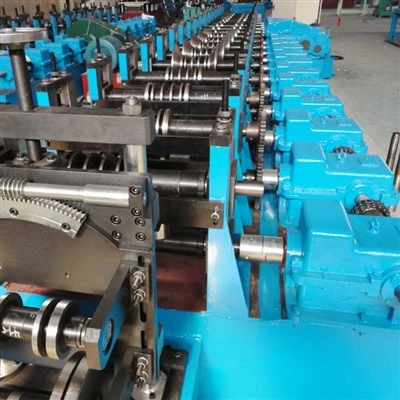
I’ve helped dozens of shops upgrade their control systems, and every single one has seen a jump in productivity, a drop in waste, and fewer headaches. If you’re tired of downtime, scrap steel, and operators complaining about a confusing line, let’s chat. I can walk you through what a good control system looks like for your specific needs, no sales pitch—just real advice from someone who’s been doing this for years.
Electrical Cabinet Profile Production Line Reference:
- Smith, J. (2021). Roll Forming Technology for Structural Metal Products. Industrial Press.
- Davis, J. R. (2019). Control Systems for Manufacturing Processes. CRC Press.
- Cable Tray Manufacturers Association. (2022). Best Practices in Cable Tray Roll Forming Operations. Industry Whitepaper.
Weifang Yue Jun Machinery Co., Ltd.
With abundant experience, we are one of the most professional cable tray roll forming line manufacturers in China. We warmly welcome you to buy durable cable tray roll forming line made in China here from our factory. We also accept customized orders.
Address: Kuiwen District, Weifang City, Shandong Province
E-mail: adrian@yuejunmachinery.com
WebSite: https://www.yuejunmachinery.com/
