Yo, what’s up everyone! I’m a dude running a data cable supply business. I get asked a ton of questions about different types of data cables every day. One of the most common ones is, "What’s the difference between an Ethernet data cable and a coaxial data cable?" So, I thought I’d sit down and write this blog to break it all down for you. Data Cable

Let’s start with Ethernet cables. You’ve probably seen these guys around. They’re those flat, multi – colored cables with those little rectangular connectors on the ends. Ethernet cables are super popular for connecting devices to a local area network (LAN), like your home Wi – Fi router to your computer.
One of the big advantages of Ethernet cables is speed. They can handle some seriously high data transfer rates. For example, Cat6a Ethernet cables can support speeds up to 10 Gigabits per second over distances of up to 100 meters. That’s crazy fast! It’s perfect for things like streaming 4K videos, online gaming, or transferring large files between devices on your network.
Ethernet cables are also really flexible when it comes to network setups. You can use them to create a wired network in your home or office, which is often more stable and secure than a wireless network. They’re great for connecting multiple devices, like computers, printers, and smart TVs, all in one go.
Another cool thing about Ethernet cables is that they’re easy to install. You just plug one end into your device and the other end into your router or switch, and you’re good to go. No special tools or skills are needed in most cases.
Now, let’s talk about coaxial cables. These cables look a bit different from Ethernet cables. They have a single copper conductor in the center, surrounded by insulation, a metallic shield, and an outer jacket. Coaxial cables have been around for a long time and were originally used for cable TV.
One of the main features of coaxial cables is their ability to carry a lot of different signals at the same time. That’s why they’re still widely used for cable TV and broadband internet services. They can transmit both video and data signals over long distances without too much signal loss.
Coaxial cables are also pretty durable. They’re designed to withstand a fair amount of wear and tear, which is great if you need to run them through walls or outdoors. The metallic shield around the cable helps protect the signal from interference, so you get a more reliable connection.
However, coaxial cables do have some drawbacks. When it comes to data transfer speeds, they can’t quite keep up with Ethernet cables. While modern coaxial cable systems can support speeds of up to a few hundred megabits per second, they’re still slower than the high – end Ethernet cables.
Another issue is that coaxial cable networks can be a bit more complicated to set up. You might need to use splitters and amplifiers to distribute the signal to multiple devices, and getting the right configuration can be a bit of a headache.
In terms of cost, Ethernet cables are generally more affordable, especially for smaller network setups. Coaxial cables can be more expensive, especially if you need to buy high – quality cables and additional equipment like splitters and amplifiers.
Let’s compare them side by side in a few key areas.
Speed
As I mentioned earlier, Ethernet cables win hands – down when it comes to speed. High – end Ethernet cables can support speeds that are way beyond what coaxial cables can offer. If you’re a gamer or someone who needs to transfer large files quickly, Ethernet is the way to go.
Distance
Coaxial cables can transmit signals over longer distances without much loss. Ethernet cables, on the other hand, have a more limited distance range. For example, Cat6 Ethernet cables are best used within 100 meters. If you need to cover a large area, coaxial cables might be a better choice.
Installation
Ethernet cables are a breeze to install. You just plug them in, and you’re done. Coaxial cables require a bit more work, like using splitters and making sure the signal is properly amplified.
Signal Interference
Both cables have some level of protection against interference. However, the metallic shield in coaxial cables gives them a bit of an edge in environments where there’s a lot of electromagnetic interference.
Cost
Ethernet cables are usually cheaper, especially for small – scale installations. Coaxial cables can be more expensive, but if you need the long – distance signal transmission or multi – signal capabilities, the extra cost might be worth it.
So, which one should you choose? Well, it depends on your needs. If you’re setting up a home network for basic internet use, streaming, and gaming, Ethernet cables are probably your best bet. They’re fast, easy to install, and affordable.
If you’re dealing with a cable TV setup or need to transmit signals over long distances, coaxial cables are the way to go. They’re reliable and can handle multiple signals at once.
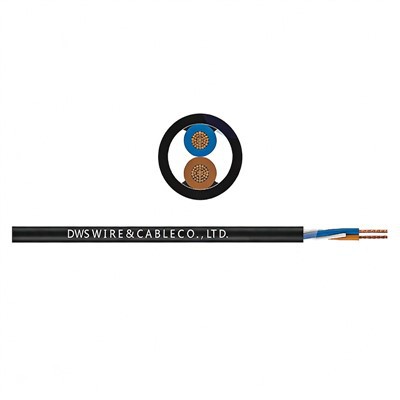
As a data cable supplier, I’ve got a wide range of both Ethernet and coaxial cables. Whether you’re a small business owner looking to upgrade your network or a homeowner wanting to set up a better internet connection, I’ve got you covered.
Control Cable If you’re interested in learning more about our products or want to discuss your specific needs, don’t hesitate to reach out. We can have a chat about which type of cable is right for you and get you the best deal possible. Let’s work together to get your data network up and running smoothly!
References
- "Data Communications and Networking" by Behrouz A. Forouzan
- "Network+ Guide to Networks" by Tamara Dean
Cixi Davos Wire & Cable Co., Ltd.
As one of the most professional data cable manufacturers and suppliers in China, we also support customized service. Please feel free to buy bulk high quality data cable in stock here from our factory. For price consultation, contact us.
Address: No.3, Lane 91, Ruan Ding Road, Linxi Village, Xiaolin Town, Cixi City
E-mail: roy798@163.com
WebSite: https://www.cj-supplychain.com/
