As a provider of Automated Sorting Systems, I’ve always been intrigued by the question of what the maximum sorting speed of such systems could be. Automated Sorting Systems are the unsung heroes of modern logistics and manufacturing, efficiently handling a vast array of items with speed and precision. But understanding their theoretical and practical maximum sorting speeds requires a deep dive into the technology, its limitations, and the factors that influence it. Automated Sorting System
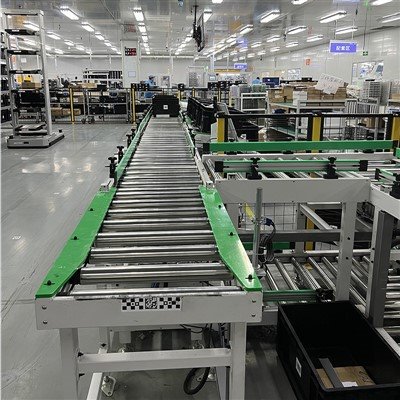
How Automated Sorting Systems Work
Before delving into the sorting speed, it’s essential to understand the basic mechanics of an Automated Sorting System. These systems are designed to identify, categorize, and divert items from a main conveyor line to specific destinations. The process typically begins with an item being placed on the conveyor. As it moves along, sensors and scanners read barcodes, RFID tags, or other identifying markers. Software algorithms then analyze this data and determine where the item should go. Based on this decision, diverters or pushers are activated to move the item onto the appropriate chute or conveyor leading to its destination.
There are several types of Automated Sorting Systems, each with its own unique design and functionality. For example, tilt-tray sorters use trays that tilt to divert items, while cross-belt sorters feature a series of belts that can move laterally to transfer items. Wheel sorters use small wheels to push items off the main conveyor, and sliding shoe sorters use shoes that slide across the conveyor surface to guide items into the correct path.
Factors Affecting Sorting Speed
The maximum sorting speed of an Automated Sorting System is influenced by a multitude of factors. Hardware limitations play a significant role. For instance, the speed at which the conveyor belts can travel is a fundamental constraint. If the belts move too fast, items may not be accurately scanned or may be damaged during the diversion process. The mechanical components of the diverters, such as the speed at which they can be activated and return to their original position, also limit the overall sorting speed.
The complexity of the items being sorted is another crucial factor. Items with irregular shapes, sizes, or weights can pose challenges for the system. For example, a large and bulky item may require more time to divert than a small and lightweight one. Similarly, items with poor barcode visibility or damaged RFID tags can slow down the scanning process, as the system may need to make multiple attempts to read the information correctly.
Software and programming also have a profound impact on sorting speed. The algorithms used to analyze the scanned data and make diversion decisions need to be highly efficient. If the software is slow to process the information or makes incorrect decisions, it can lead to delays and bottlenecks in the sorting process. Additionally, the system’s ability to handle a high volume of items simultaneously, known as its throughput capacity, is determined by the software’s ability to manage multiple tasks and prioritize the sorting of different items.
Environmental factors can also affect sorting speed. Temperature, humidity, and dust levels in the operating environment can impact the performance of the sensors and mechanical components. For example, high humidity can cause barcode labels to become smudged, making them difficult to read. Similarly, dust can accumulate on the sensors and affect their accuracy.
Theoretical Maximum Sorting Speed
From a theoretical perspective, the maximum sorting speed of an Automated Sorting System can be calculated based on the speed of its components and the time required for each step of the sorting process. For example, if a conveyor belt can travel at a maximum speed of 2 meters per second and the distance between the scanner and the diverter is 1 meter, the time taken for an item to travel from the scanner to the diverter is 0.5 seconds. If the diverter can be activated and return to its original position in 0.1 seconds, and the scanning process takes 0.2 seconds, the total time required to sort an item is 0.8 seconds. Based on this calculation, the theoretical maximum sorting speed would be 1 item every 0.8 seconds, or 750 items per hour.
However, this is a simplified calculation that does not take into account the complexity of real-world scenarios. In practice, there are always additional factors that need to be considered, such as the time required for the system to adjust to changes in the flow of items, the probability of errors occurring, and the need for maintenance and downtime.
Practical Limitations
In real-world applications, achieving the theoretical maximum sorting speed is often challenging. One of the main practical limitations is the need to balance speed with accuracy. As the sorting speed increases, the probability of errors also increases. For example, if the conveyor belts are moving too fast, the scanners may not be able to read the barcodes accurately, leading to mis-sorted items. This can result in additional costs for re-sorting and customer dissatisfaction.
Another practical limitation is the variability of the items being sorted. In a typical logistics or manufacturing environment, the items can vary widely in terms of their size, shape, weight, and packaging. This variability makes it difficult to optimize the system for maximum sorting speed. For example, a system that is designed to handle small and lightweight items may not be able to achieve the same sorting speed when dealing with large and bulky items.
Maintenance and downtime also have a significant impact on the practical sorting speed. Automated Sorting Systems are complex machines that require regular maintenance to ensure their proper functioning. Components such as conveyor belts, sensors, and diverters need to be inspected and replaced periodically. Additionally, unforeseen breakdowns can occur, leading to downtime and a reduction in sorting speed.
Industry Benchmarks
While the maximum sorting speed of an Automated Sorting System varies depending on the specific application and the factors mentioned above, there are some industry benchmarks that can provide a general idea of what is achievable. In the e-commerce and parcel sorting industry, high-end systems can typically sort between 10,000 and 20,000 items per hour. In the food and beverage industry, where items are often smaller and more uniform in size, sorting speeds of up to 30,000 items per hour can be achieved.
However, these are just averages, and some systems may be able to achieve even higher sorting speeds under ideal conditions. For example, some advanced systems that are specifically designed for high-volume sorting applications can sort up to 40,000 items per hour or more.
Strategies to Increase Sorting Speed
As a provider of Automated Sorting Systems, we are constantly exploring ways to increase the sorting speed of our systems while maintaining accuracy and reliability. One strategy is to optimize the hardware design. This includes using high-speed conveyor belts, advanced sensors, and fast-acting diverters. We also focus on reducing the distance between the different components of the system to minimize the travel time of the items.
Another strategy is to improve the software algorithms. By using machine learning and artificial intelligence techniques, we can develop algorithms that can analyze the scanned data more quickly and accurately. These algorithms can also adapt to changes in the flow of items and the characteristics of the items being sorted in real-time, improving the overall efficiency of the system.

In addition to hardware and software optimization, we also offer training and support services to our customers. By ensuring that the operators are properly trained and have a good understanding of the system, we can minimize the occurrence of errors and downtime. We also provide regular maintenance and monitoring services to keep the system running at its optimal performance.
Contact Us for Your Sorting Needs
Automated Guided Vehicle If you’re looking for an Automated Sorting System that can meet your specific sorting speed requirements, look no further. Our team of experts has extensive experience in designing and implementing Automated Sorting Systems for a wide range of industries. We can work with you to understand your needs and develop a customized solution that is tailored to your specific application. Whether you’re in the e-commerce, logistics, manufacturing, or any other industry, we have the expertise and resources to help you achieve your sorting goals. Contact us today to start a conversation about how our Automated Sorting Systems can improve the efficiency and productivity of your operations.
References
- Porter, D. G. (2018). Automated materials handling systems. CRC Press.
- Tompkins, J. A., White, J. A., Bozer, Y. A., & Tanchoco, J. M. A. (2010). Facilities planning. John Wiley & Sons.
- Wilson, J. M. (2003). Guide to warehouse automation. Focal Press.
Shenzhen Ginnee Intelligent Warehousing Robotics Co., Ltd.
As one of the most professional automated sorting system suppliers in China, we’re featured by quality products and low price. Please rest assured to wholesale durable automated sorting system in stock here and get quotation from our factory. We also accept customized orders.
Address: Room101, No.162 JunXin Road, Niuhu Community, Guanlan Strect, Longhua District, Shenzhen, Guangdong Province, China.
E-mail: huangyongmei@szginnee.com
WebSite: https://www.ginneerobotics.com/
