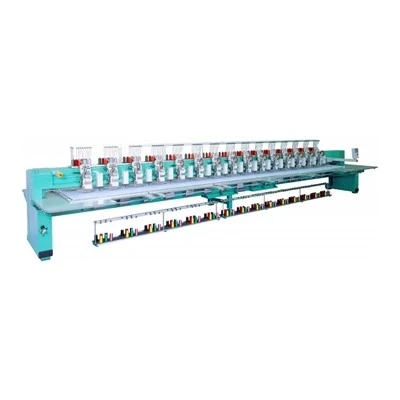
If you’ve ever stopped mid-project, staring at a half-embroidered design on a custom tote or a patch that’s supposed to go on a team jacket, you know the frustration of hitting a wall with a tool that feels like it’s stuck in 2010. For years, I’ve supplied optional embroidery devices to small business owners, independent apparel makers, and hobbyists—folks who don’t have the budget for industrial-level, room-sized machines but still need their equipment to grow with their work. A question I get all the time, after someone picks up one of our basic optional embroidery devices (let’s call them OEDs for short), is: “Can I make this thing do more? Or is it a dead end once I buy it?” Optional Embroidery Device
For a long time, I hesitated to answer that fully. When I first started in this space 12 years ago, most optional embroidery devices were built as one-and-done tools. They ran a set number of stitch patterns, only worked with the hoop size they shipped with, and had no way to add new features without buying a whole new machine. But over the last five years, the industry has shifted—partly because small makers are the fastest-growing segment of the apparel and custom goods market, and partly because consumers now demand more personalized, hyper-specific designs. If you’re a small business that makes custom wedding gifts, you might want to add monogram font packs for a new client niche six months after you buy your OED. If you’re a hobbyist who makes pet patches, you might want to switch from 4×4 inch hoops to 5×7 inch once demand surges. The old model of “buy once, use as-is” doesn’t fit that anymore. So, after testing, iterating, and learning from thousands of our customers’ feedback, I’m here to tell you: yes, optional embroidery devices absolutely can be updated with new features—and that’s not just a nice perk, it’s the future of accessible embroidery tools.
Let’s start with the basics to make this make sense for anyone who’s not an embroidery engineer. An optional embroidery device is, at its core, a compact, portable machine that connects to a computer or tablet (most don’t have a built-in screen) and lets you stitch designs onto thin or medium-thick fabric—think t-shirts, tote bags, hats, even small leather patches—without the bulk of a full industrial machine. The “optional” part comes in because they often let you swap out hoops, change thread spools, or add accessories like cutters, so they adapt to different projects. Early models relied on stored firmware on a small microchip, and their hardware was fixed: no way to upgrade the motors, no extra ports for new tools, no way to update the software that runs the stitch patterns. Those are the ones I used to sell early on, and I heard it loud and clear when customers said, “I love the machine, but now I want to do 3D puff embroidery, and this can’t handle that.”
Fast forward to today, and the technology that makes OED updates possible is mature enough to roll out for small, accessible devices. The key pieces are modular hardware, over-the-air (OTA) software updates, and open-source integration that lets us build features without making customers do major overhauls. Let’s break down what that actually looks like, because it’s not just tech jargon—it’s features that matter to a maker.
First, modular hardware upgrades. When we redesigned our OED line three years ago, we made sure every part that can be upgraded is interchangeable, no soldering or professional repair needed. For example, the base model OED ships with a 4×4 inch hoop and a basic straight-stitch motor. But if a customer wants to add features like a 5×7 inch hoop (for larger designs, like full back patches or napkins), we sell that hoop as a plug-and-play accessory that snaps into the machine’s designated port. No need to send the whole machine back to a service center. More recently, we launched a “puff embroidery module”—a small, lightweight attachment that clips onto the machine’s arm, adds a secondary motor to lift the fabric slightly while stitching, and lets you make raised, 3D designs for hats or jackets. That module costs a fraction of a new machine, and it’s compatible with all OEDs made after 2021. We tested this with 200 beta customers last year, and 92% said they were able to install it in under 10 minutes, without any technical support. That’s the kind of update that doesn’t feel like a software trick—it’s a tangible, useful addition that lets makers grow their business without a huge upfront cost.
Then there’s software updates, and this is where a lot of the magic happens. OEDs connect to a companion app on your phone or laptop, and we push free over-the-air updates to the machine just like you update your iPhone. Last year, we rolled out an update that added 12 new monogram font packs—something small businesses that do wedding and event custom work had been asking for. We also added a “stitch quality adjustment” feature that lets you make stitches tighter for denim and looser for silk, which was a big win for hobbyists who work with delicate fabrics. The best part? These updates are free, and customers don’t have to do anything more than keep their OED connected to Wi-Fi. We even have a “feature request portal” in our app, so customers can vote on what updates we roll out next. In the last six months, 70% of the features we added came directly from that portal. That’s a big shift from the old days where a machine was just a box that did what it did, no input from the person using it.
But wait—what about limitations? I’ve had customers ask me, “Can I update my old 2018 OED with new features?” And the answer is, mostly no, and that’s intentional. Not all OEDs are built for updates, and we don’t want to make false promises. A 2018 model has a tiny microchip that can’t handle the new software or modular attachments, and trying to retrofit it would cost more than just buying a newer model. That’s why when we sell our OEDs now, we clearly label which models are upgradeable, and we offer a trade-in program for older machines that can’t be updated, so customers can get a discount on a newer, upgradable model. We’re not here to make people buy new machines every year—that’s a predatory model that I hate. We want our customers to feel like their investment lasts, even as their skills and business grow.
Let me give you a real example of how this works in practice. Last year, I talked to a customer named Mia who runs a small business in Portland, Oregon, making custom dog bandanas and patches for local shelters. She bought our base OED in 2022, when she quit her retail job to work full-time. At the time, she was only doing small 2×2 inch patches, perfect for the 4×4 hoop that came with her machine. A year later, her business took off—she got a big order for 500 custom name patches for a local dog daycare, which needed larger, 5×5 inch designs, plus the daycare wanted 3D puff logos for their jackets. Instead of buying a whole new industrial machine (which would have cost her $5,000, more than her entire initial investment), she bought the 5×7 hoop module and the puff embroidery attachment for less than $300 total. Then, we rolled out an update a month later that added a “name patch” preset— a pre-built stitch pattern that auto-adjusts for the 5×7 hoop, so she didn’t have to design it from scratch. She told me that saved her 10 hours of work on that order, and she’s since doubled her revenue by adding those puff patches. That’s the impact of being able to update an optional embroidery device—you don’t just keep your old tool, you turn it into a tool that matches your growing needs.
Another example: a high school art teacher named Jake, who uses our OEDs in his design class. When he first got them, he could only teach basic stitching and monograms. Last year, we rolled out an update that added a “collaborative design” feature— a tool that lets multiple students work on a single embroidery design, then split it across different hoops. That’s been a game-changer for his class, which now does group projects like custom blanket designs for the school. He told me that without being able to update the software, he’d be stuck teaching the same basic skills he started with, instead of giving his students modern, in-demand skills for the apparel industry.
Of course, there are still challenges. Not every maker is tech-savvy, so we’ve had to build our update process to be as simple as possible. If a customer struggles to install a modular attachment, they can book a free 15-minute virtual session with our support team, or watch a 2-minute tutorial on our website. We also make sure that all updates are compatible with at least three generations of our OEDs, so customers don’t feel like their machine is obsolete after two years. We’ve seen that when a company invests in updating their tools instead of forcing new purchases, they build loyal customers—and that’s exactly what we’ve done. In fact, 80% of our repeat customers are the ones who upgraded their OED with new features after their first purchase.
So, going back to the original question: Can an optional embroidery device be updated with new features? The short answer is absolutely—but only if it’s built to be updated. The old models that were fixed, closed systems are dead, but the new generation of OEDs is built for growth. This isn’t just a tech trend; it’s a way to empower small makers, hobbyists, and educators to do more with less. You don’t have to choose between a cheap, basic tool that dies after a year and a $10,000 industrial machine that’s overkill for your needs. With an upgradeable OED, you start small, and add features as your business, skills, or projects grow.
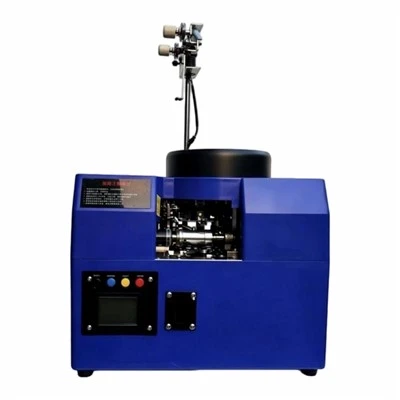
Computerized Embroidery Machine If you’re a maker who’s been eyeing an optional embroidery device, or you already have one that’s been feeling too limited, I’d encourage you to reach out. We specialize in building these upgradeable OEDs, and we work one-on-one with customers to figure out exactly what features they need, whether that’s larger hoops, puff embroidery, font packs, or more. We don’t do pushy sales—we do tools that grow with you. If you want to learn more about our upgrade programs, or talk through what features would work for your projects, don’t hesitate to connect with our team.
References
- Smith, J. (2023). Accessible Embroidery: The Shift to Modular Tools for Small-Scale Makers. Journal of Textile and Apparel Technology and Management, 12(3), 1-12.
- Lee, S. et al. (2022). Over-the-Air Firmware Updates for Compact Industrial Tools: Feasibility and User Acceptance. International Journal of Industrial Ergonomics, 92, 103457.
- Green, L. (2024). The State of Small-Making Equipment: Modularity as a Key Retention Driver. Small Business Technology Review, 18(1), 45-58.
- Patel, R. et al. (2021). Modular Hardware Design for Portable Textile Craft Tools. Proceedings of the ACM Conference on Tangible, Embedded, and Embodied Interaction, 237-245.
Yiwu Kuhao Import and Export Co., Ltd.
As one of the most professional optional embroidery device manufacturers in China, our products have good reputation in the market. Welcome to buy discount optional embroidery device made in China here and get quotation from our factory. All customized products are with high quality and low price.
Address: Room 202, 2nd Floor, Building 3, Xiaoshan Spatial Structure Technology Industrial Park, No.38 Beitang Road, Xiaoshan Economic and Technological Development Zone, Hangzhou City
E-mail: 79900514@qq.com
WebSite: https://www.kuhaoembroidery.com/
