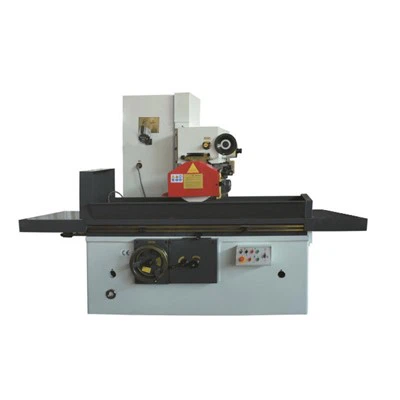
As a supplier of manual surface grinders, I’ve witnessed firsthand the crucial role that grinding wheel hardness plays in the overall grinding process. The choice of the right grinding wheel hardness can significantly impact the quality, efficiency, and cost-effectiveness of the grinding operation. In this blog, I’ll delve into the effects of grinding wheel hardness on the grinding results of a manual surface grinder. Manual Surface Grinder

Understanding Grinding Wheel Hardness
Before we explore the effects, it’s essential to understand what grinding wheel hardness means. The hardness of a grinding wheel refers to the ability of the bonding material to hold the abrasive grains in place during the grinding process. It is not related to the hardness of the abrasive grains themselves. A hard grinding wheel has a strong bond that holds the abrasive grains firmly, while a soft grinding wheel has a weaker bond that allows the grains to be released more easily.
The hardness of a grinding wheel is typically classified using a letter scale, ranging from A (softest) to Z (hardest). The choice of the appropriate hardness depends on several factors, including the material being ground, the grinding operation, and the desired surface finish.
Effects on Grinding Efficiency
One of the primary effects of grinding wheel hardness on the grinding result is its impact on grinding efficiency. A hard grinding wheel is more suitable for grinding hard materials because it can maintain its shape and cutting ability for a longer time. The strong bond holds the abrasive grains in place, allowing them to cut through the material effectively. This results in a higher material removal rate and shorter grinding times.
On the other hand, a soft grinding wheel is better for grinding soft materials. The weaker bond allows the worn abrasive grains to be released more easily, exposing fresh grains and maintaining the cutting ability of the wheel. This prevents the wheel from becoming clogged with the soft material, which can reduce grinding efficiency.
Impact on Surface Finish
The hardness of the grinding wheel also has a significant impact on the surface finish of the workpiece. A hard grinding wheel tends to produce a smoother surface finish because it can maintain a consistent cutting edge. The abrasive grains are held firmly in place, resulting in a more precise and uniform cut. This is particularly important for applications where a high-quality surface finish is required, such as in the manufacturing of precision components.
However, a hard grinding wheel can also cause surface damage if the grinding pressure is too high or if the wheel is not properly dressed. The excessive pressure can cause the abrasive grains to dig into the workpiece, resulting in scratches and other surface defects.
In contrast, a soft grinding wheel can produce a rougher surface finish. The loose abrasive grains can cause more chatter and vibration during the grinding process, which can result in a less smooth surface. However, a soft grinding wheel is less likely to cause surface damage, making it a better choice for grinding delicate or brittle materials.
Influence on Wheel Wear
The hardness of the grinding wheel affects its wear rate. A hard grinding wheel wears more slowly than a soft grinding wheel because the strong bond holds the abrasive grains in place. This means that a hard grinding wheel can be used for a longer time before it needs to be replaced, resulting in lower costs and less downtime.
However, a hard grinding wheel can also become dull more quickly if it is used to grind soft materials. The abrasive grains may not be able to cut through the soft material effectively, causing them to become dull and lose their cutting ability. In this case, a soft grinding wheel would be a better choice because it can release the worn grains more easily and expose fresh grains.
Considerations for Different Materials
The choice of grinding wheel hardness also depends on the material being ground. Here are some general guidelines for different materials:
- Hard Materials: For hard materials such as hardened steel, carbide, and ceramics, a hard grinding wheel is usually recommended. The hard wheel can maintain its cutting ability and shape, resulting in a higher material removal rate and a better surface finish.
- Soft Materials: For soft materials such as aluminum, copper, and brass, a soft grinding wheel is more suitable. The soft wheel can prevent clogging and maintain its cutting ability, resulting in a more efficient grinding process.
- Heat-Sensitive Materials: For heat-sensitive materials such as titanium and stainless steel, a soft grinding wheel is often preferred. The soft wheel can reduce the heat generated during the grinding process, which can prevent the material from being damaged.
Conclusion
In conclusion, the hardness of the grinding wheel has a significant impact on the grinding results of a manual surface grinder. The choice of the appropriate hardness depends on several factors, including the material being ground, the grinding operation, and the desired surface finish. A hard grinding wheel is more suitable for grinding hard materials, while a soft grinding wheel is better for grinding soft materials.
Hydraulic Surface Grinder As a supplier of manual surface grinders, I understand the importance of choosing the right grinding wheel for your specific application. If you’re looking for a reliable and efficient manual surface grinder, or if you need advice on choosing the right grinding wheel, please don’t hesitate to contact us. We’re here to help you achieve the best grinding results possible.
References
- Kalpakjian, S., & Schmid, S. R. (2009). Manufacturing Engineering and Technology (5th ed.). Pearson Prentice Hall.
- Trent, E. M., & Wright, P. K. (2000). Metal Cutting (4th ed.). Butterworth-Heinemann.
- Stephenson, D. A., & Agapiou, J. S. (2006). Metal Machining: Theory and Applications (2nd ed.). CRC Press.
Wuxi Mingxu Machinery Equipment Co., Ltd.
As one of the most professional manual surface grinder manufacturers and suppliers in China, we’re featured by quality products and good price. Please rest assured to buy the best manual surface grinder for sale here from our factory. Also, custom service is available.
Address: No. 5-5 Jinke Wealth Plaza, Changjiang North Road, Xinwu District, Wuxi City, Jiangsu Province
E-mail: yingyingmxjd@163.com
WebSite: https://www.mingxu-china.com/
