Yo, what’s up everyone! I’m a supplier of Conical Compression Springs, and today I wanna chat about how the stiffness of these springs changes with different parameters. It’s super important to understand this, especially if you’re in the market for high – quality conical compression springs. Conical Compression Spring
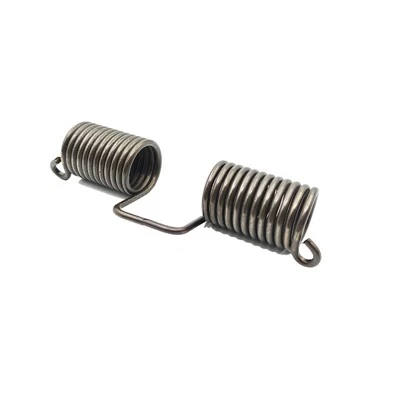
Let’s start with the basics. Stiffness, in the context of springs, is how resistant a spring is to being compressed. You can think of it like this: if you have a super stiff spring, it’s gonna take a lot of force to make it squeeze down. On the flip side, a less stiff spring will compress easily, kinda like a marshmallow compared to a rock.
One of the major parameters that affects the stiffness of conical compression springs is the wire diameter. When you increase the wire diameter, the stiffness of the spring goes up. Why does this happen? Well, a thicker wire is stronger and more resistant to bending. It’s like when you try to bend a thin metal rod versus a thick one. The thick rod is way harder to bend. In the case of springs, the thicker wire can better withstand the forces that are trying to compress the spring, so you need more force to make it compress.
For example, if you have a conical compression spring with a small wire diameter, say 1mm, it might be relatively easy to compress by hand. But if you increase that wire diameter to 5mm, you’d need a hydraulic press or some other heavy – duty equipment to compress it. This change in wire diameter can have a huge impact on the applications where these springs are used. Small – diameter springs might be great for things like pen mechanisms or small electronic devices where you don’t need a lot of force. But large – diameter springs are used in heavy machinery, automotive suspensions, and other high – force applications.
Another key parameter is the mean coil diameter. The mean coil diameter is the average diameter of the coils in the spring. If you increase the mean coil diameter, the stiffness of the conical compression spring decreases. Picture a slinky. A larger – diameter slinky is easier to stretch or compress compared to a smaller – diameter one. The same principle applies to conical compression springs.
When the coils are larger, the spring has more room to expand and contract. The forces acting on the spring are distributed over a larger area, and it takes less force to cause a certain amount of compression. For instance, in a car’s suspension system, springs with different mean coil diameters are used to adjust the stiffness. A smaller mean coil diameter spring will provide a stiffer suspension, which is great for high – performance cars where you want less body roll during sharp turns. On the other hand, a larger mean coil diameter spring will give a softer ride, which is more comfortable for everyday driving.
The number of active coils also plays a big role in determining the stiffness. Active coils are the coils that actually contribute to the spring’s compression and expansion. If you increase the number of active coils, the stiffness of the spring decreases. It’s similar to having more people trying to hold up a heavy object. The more people (or in this case, coils) you have, the less force each one has to bear.
Let’s say you have a conical compression spring with 5 active coils. It’s gonna be stiffer than a spring with 10 active coils, assuming all other parameters are the same. Springs with fewer active coils are often used in applications where you need a high – stiffness spring, like in some industrial presses. Meanwhile, springs with more active coils are used in applications where a softer, more gradual compression is required, like in some consumer products such as toys or certain types of furniture.
The material of the spring is another crucial parameter. Different materials have different mechanical properties, and these properties directly affect the spring’s stiffness. For example, steel is a very common material for conical compression springs. It’s strong and has a relatively high stiffness. Stainless steel is also popular, especially in applications where corrosion resistance is important. It has similar stiffness to regular steel but can withstand harsh environments better.
On the other hand, materials like brass or bronze have lower stiffness compared to steel. They’re often used in applications where you need a spring that’s less stiff and has good electrical conductivity, such as in some electrical contacts. The choice of material can also be influenced by factors like cost, availability, and the specific operating conditions of the spring. If you’re in a high – temperature environment, you might choose a material that can withstand those temperatures without losing its stiffness.
Now, when it comes to the conical shape itself, the taper angle affects the stiffness. A larger taper angle generally results in a more variable stiffness. As the spring compresses, different parts of the spring will contribute more or less to the overall resistance. In some cases, a conical spring with a large taper angle can provide a progressive stiffness. This means that the stiffness increases as the spring is compressed further.
This progressive stiffness can be really useful in applications where you need a different amount of force at different stages of compression. For example, in some shock absorbers, a conical spring with a specific taper angle can provide a soft initial compression to absorb small bumps, and then a stiffer compression as the shock absorber is fully engaged to handle larger impacts.
So, why does all this matter to you? Well, if you’re in the business of using conical compression springs, understanding how these parameters affect stiffness can help you choose the right spring for your application. Whether you’re building a high – tech gadget or a heavy – duty machine, getting the stiffness just right is crucial for optimal performance.
As a supplier of Conical Compression Springs, I’ve seen firsthand how these different parameters can make or break a project. That’s why I’m always here to help you find the perfect spring for your needs. We’ve got the expertise to customize springs based on your specific requirements. Whether you need a high – stiffness spring for a tough industrial job or a soft spring for a delicate electronic device, we’ve got you covered.

If you’re interested in learning more or want to start a procurement discussion, don’t hesitate to reach out. We’re here to provide you with top – notch conical compression springs and excellent customer service. Let’s work together to make your project a success!
Extension Spring References
- Budynas, R. G., & Nisbett, J. K. (2011). Shigley’s Mechanical Engineering Design. McGraw – Hill.
- Juvinall, R. C., & Marshek, K. M. (2011). Fundamentals of Machine Component Design. Wiley.
Shengzhou Deyuxiang Hardware Accessories Co., Ltd.
We are one of the most professional conical compression spring manufacturers and suppliers in China, also support customized service. With abundant experience, we warmly welcome you to buy high quality conical compression spring made in China here and get pricelist from our factory. For price consultation, contact us.
Address: No. 38, Caosheng Road, Caoqiao Street, Pinghu City, Jiaxing City, Zhejiang Province
E-mail: 877286126@qq.com
WebSite: https://www.dyx-spring.com/
