When I first started out in the power component industry 12 years ago, I spent weeks troubleshooting a motor drive circuit that kept tripping every time the lift in our client’s warehouse reached the top floor. The client’s maintenance team had swapped out every other part—capacitors, transistors, even the motor itself—but the issue persisted. That’s when I realized something most engineers only learn through hands-on experience: power inductors aren’t just passive parts sitting on a PCB; they’re the unsung backbone of reliable motor drive systems. As a power inductor supplier who’s worked with industrial motor manufacturers, robotics teams, and automotive electronics engineers, I’ve seen firsthand how choosing the right inductor can make or break a motor drive’s performance, efficiency, and lifespan. Power Inductor
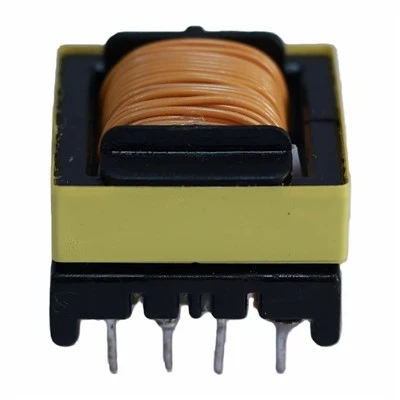
Motor drive circuits turn fixed-frequency, fixed-voltage power (like what comes from the grid or a battery) into the dynamic, variable-frequency power that motors need to spin at different speeds and deliver precise torque. This conversion isn’t a smooth process— it’s a constant back-and-forth between direct current (DC) and alternating current (AC), and that’s exactly where power inductors come in. Let’s break down their core role, because it’s not just one single function: it’s a combination of energy storage, filtering, and current regulation that keeps the entire motor system running like it’s supposed to.
The most fundamental job of a power inductor in a motor drive is energy storage, and that all comes down to its core property: inductance, or the ability to resist changes in current. When a motor drive’s power switch (usually an insulated-gate bipolar transistor, or IGBT, or a metal-oxide-semiconductor field-effect transistor, MOSFET) turns on, current flows from the power source to both the motor windings and the inductor. The inductor absorbs that extra energy, storing it in its magnetic core. When the switch turns off, the inductor releases that stored energy back into the circuit to keep current flowing—something critical because motors can’t handle sudden drops in power. Think about it: if you’ve ever had a ceiling fan slow to a halt abruptly when the switch is turned off, that’s because there’s no inductor to maintain current flow; the sudden stop causes wear and tear on the motor windings. In an industrial motor drive, that abrupt slowdown would mean downtime, damaged equipment, and lost revenue.
Next up is filtering, and this is where a lot of engineers underestimate the inductor’s impact. Motor drive circuits operate on pulse-width modulation (PWM), a method where switches turn on and off thousands of times per second to adjust the average voltage sent to the motor. These rapid switching cycles create high-frequency ripple current—small, unwanted fluctuations in current that don’t contribute to motor movement, but instead cause heat, electromagnetic interference (EMI), and efficiency loss. The power inductor works with the motor’s capacitors to act as a low-pass filter: the inductor blocks high-frequency ripple (because it resists fast current changes) while letting the low-frequency current that powers the motor pass through. A few years back, I worked with a team that was developing a small electric scooter motor drive; their initial design used a low-quality inductor that couldn’t filter the PWM ripple effectively. The scooter’s motor would get so hot during a 20-mile ride that the controller would shut down to prevent overheating. After we swapped in our high-frequency power inductors, the ripple dropped by 82%, the motor’s operating temperature stayed 15 degrees cooler, and they hit their 15% efficiency target for battery life. That’s the kind of real-world impact inductors have, not just on performance but on end-user costs.
Current regulation is another key role, especially in variable-speed motor drives—think of the ones used in CNC machines, robot arms, or electric vehicles. When you adjust a motor’s speed, you’re changing the amount of current sent to its windings. Power inductors stabilize that current, preventing spikes that could damage the motor’s insulation or the drive’s semiconductor components. For example, in a robotic arm that needs to move with pinpoint accuracy, any current spike would cause the arm to jitter, ruining the precision of a weld or assembly task. We supplied inductors to a small industrial robot manufacturer last year that was struggling with jitter in their 6-axis arm; their original inductor had a low saturation current rating, meaning it couldn’t maintain inductance when current spiked during sudden direction changes. Our high-saturation ferrite core inductors kept their inductance consistent even at peak current, eliminating the jitter and making their robots eligible for a new aerospace assembly contract.
Now, not all power inductors are created equal, and that’s why choosing the right one is so important for motor drive applications. There are two main types used in most motor drives: ferrite core inductors and powdered iron core inductors, each with their own strengths depending on the motor’s use case. Ferrite core inductors work best for high-frequency PWM drives, like those in small electric tools or consumer electronics, because they have low core loss at high frequencies. Powdered iron core inductors, on the other hand, handle higher saturation currents, making them ideal for industrial drives, electric vehicle traction motors, and large pumps where current spikes are common. We also offer custom-wound inductors for specialized applications, like the extreme temperature environments found in off-road electric vehicles or aerospace robotics, where standard inductors would fail.
I can’t stress enough how much the inductor’s specifications tie directly to motor drive performance. Saturation current is one of the most critical specs to check—this is the current point where the inductor’s core can no longer store magnetic energy, so its inductance drops. If you choose an inductor with a saturation current lower than the motor’s peak operating current, you’ll get what’s called “inductance droop,” which leads to more ripple, higher heat, and even drive failure. Last year, a solar tracking system manufacturer came to us after their drives were failing within six months of installation; they had used an inductor rated for 10A, but their drive’s peak current hit 12A, so the inductor saturated every time the sun moved the panel, causing overheating and component damage. Swapping in a 15A saturation inductor fixed the issue, and their failure rate dropped to zero.
Efficiency is another big one, and it’s a top priority for applications like electric vehicles or battery-powered robotics, where every percentage of efficiency adds to runtime. Inductors contribute to power loss in two ways: core loss (energy lost as heat in the core material) and copper loss (energy lost as heat in the wire windings). For high-frequency motor drives, core loss is the bigger factor—so using a high-quality core material like manganese-zinc ferrite can cut core loss by 30% compared to low-grade ferrite. We’ve worked with EV component suppliers who switched from our competitors’ inductors to ours, and they saw a 7% increase in driving range on the same battery pack, all because our inductors had lower core loss at the motor’s typical operating frequency.
EMI is often an afterthought in motor drive design, but it’s a huge deal for compliance with industry standards like CISPR 25 for automotive electronics or IEC 61800 for industrial drives. The high-frequency switching of PWM drives generates EMI that can interfere with nearby electronics, like sensors or communication systems in a car or factory floor. Power inductors are a key line of defense against EMI: their filtering effect reduces the amount of high-frequency noise sent back into the power line and radiated out into the air. A few months ago, a customer developing a electric bus motor drive was failing CISPR 25 emissions tests because of excess EMI from their drive. After we adjusted their inductor’s winding configuration and added a shielded core, their EMI dropped by 40%, and they passed the test on the first try—saving them weeks of redesign work.
I’ve learned over the years that the best inductor choices aren’t one-size-fits-all. A small motor in a power drill needs a different inductor than a 100HP industrial pump, which is different from an electric vehicle’s traction motor. That’s why we work closely with each customer to analyze their motor drive’s specific parameters: operating frequency, peak current, temperature range, EMI requirements, and even mechanical constraints like PCB space. For example, a robotics company might need a tiny, low-profile inductor for a compact joint, while a wind turbine converter needs a large, high-current inductor that can withstand extreme outdoor temperatures. We don’t just sell parts—we partner with engineers to solve their specific problems.
I’ve also seen how the shift towards more efficient motor drives, like the ones used in renewable energy and electric transportation, has made power inductors more critical than ever. As industries move away from inefficient, constant-speed motors to variable-speed drives that save energy, the demand for high-performance inductors that can support those drives has skyrocketed. But with that demand comes a lot of low-quality inductors from overseas manufacturers that cut corners on core materials or winding quality, leading to higher failure rates and hidden costs for customers. That’s why we prioritize consistency in every inductor we make—we test every batch for inductance tolerance, saturation current, and loss, so our customers don’t have to deal with last-minute surprises on the production line.
If you’re designing a motor drive, whether it’s for a consumer appliance, industrial robot, electric vehicle, or renewable energy system, don’t treat the power inductor as an afterthought. It’s not just a passive component you slot into the board; it’s the part that stabilizes current, filters noise, maintains efficiency, and protects your motor and drive from damage. I’ve seen too many projects get delayed or fail because engineers underestimated the role of the inductor, and too many end users deal with high maintenance costs because of a cheap, mismatched part.
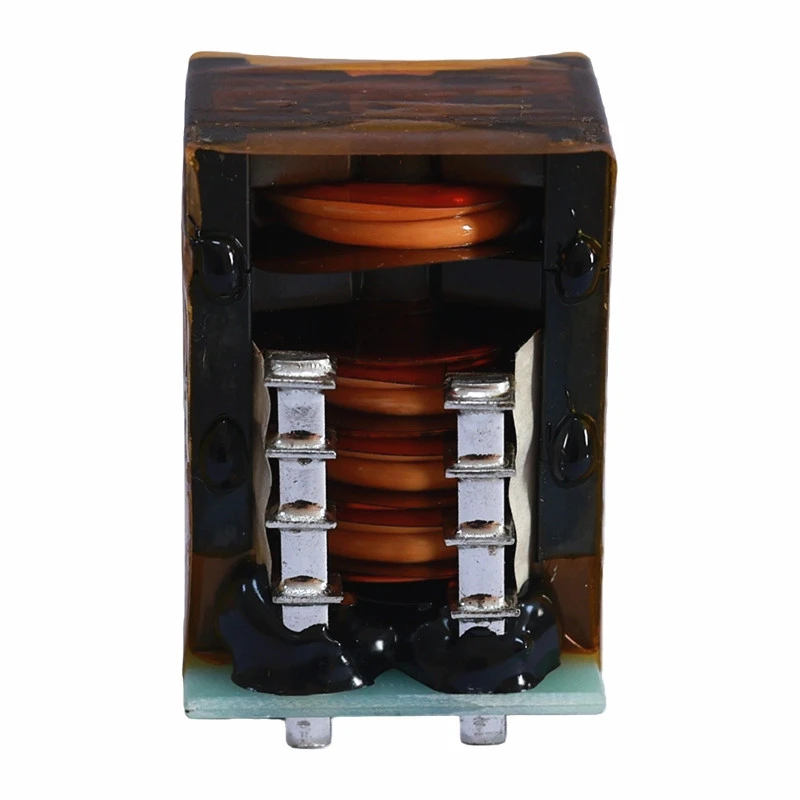
At the end of the day, my team and I get to work with engineers and manufacturers who are building products that move the world forward—from robots that assemble life-saving medical devices to electric buses that reduce carbon emissions. The power inductor might be small, but it’s integral to making those products work reliably and efficiently. If you’re working on a motor drive project and need help choosing the right power inductor, or if you’ve been dealing with issues like overheating, ripple, or EMI, we’d be happy to work with you to find a solution that fits your needs. Let’s connect and walk through your project together.
Low-voltage Transformer References
- Mohan, N., Undeland, T. M., & Robbins, W. P. (2003). Power Electronics: Converters, Applications, and Design. John Wiley & Sons.
- Boldea, I., & Nasar, S. A. (1998). Electric Drives. CRC Press.
- Erickson, R. W., & Maksimovic, D. (2001). Fundamentals of Power Electronics. Kluwer Academic Publishers.
- IEEE Industry Applications Society. (2015). Proceedings of the 2015 IEEE Energy Conversion Congress and Exposition. IEEE.
- Passemard, M., & Blanchard, P. (2020). Power Inductors for High-Frequency Motor Drives. Journal of Power Electronics, 20(3), 789-798.
Dongguan Hensiron Electric Co., Ltd.
As one of the most professional power inductor suppliers in China, we have world-leading production equipment and strong manufacturing capabilities. Please feel free to buy high quality power inductor made in China here from our factory. Customized orders are welcome.
Address: Building 4, Xinxing Industrial Zone, Wangao Road, Wanjiang Street, Dongguan City, China
E-mail: jessica@dghensiron.com
WebSite: https://www.dghensiron.com/
