If you’ve ever spent time at a BMX skate park, you’ve probably seen more than one rider bail on a tire blowout mid-rail grind or a flat tire right before a big jump. As someone who’s been in the BMX TPU tubes game for over a decade—running a small, family-focused operation out of a garage turned workshop in the Midwest—I’ve heard every frustrated complaint about that old inner tube: “It pinch-flatted on a 2-foot drop.” “It got sliced by a tiny piece of glass no one could see.” “I just fixed it, and now it’s slipped out of the bead.” The last one is the one that’s stuck with me lately, because it’s a problem that no amount of patching or replacing old rubber tubes seems to fix—especially when you’re riding TPU tubes, the lightweight, high-durability alternative we’ve built our business around. BMX TPU Tubes
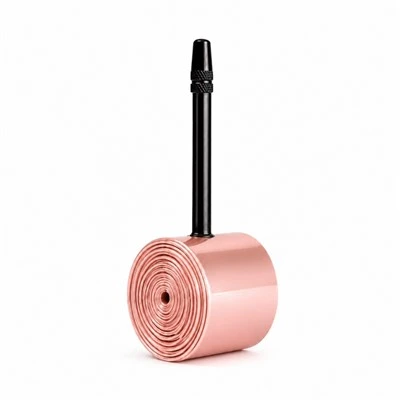
Let’s cut through the hype and the confusing tech jargon: the interaction between a BMX TPU tube and its tire bead isn’t just a “fits in, stays in” process. It’s a dynamic, pressure-dependent relationship that can make or break a ride, a trick, and even a rider’s safety. For anyone who’s ever wondered why their TPU tube works great for street riding but keeps slipping off during a vert session, or why some riders swear by TPU and others still cling to butyl, this is the breakdown you’ve been looking for.
First, let’s start with the basics, but skip the textbook stuff that bores every rider who just wants to fix a flat and get back to the park. A tire bead is the stiff, reinforced edge of a bike tire—usually made of steel wire, Kevlar, or sometimes a blend—that locks the tire onto the rim. It’s the anchor that keeps your tire from sliding sideways on the rim during a grind or a turn, and it’s the point where the inner tube meets the most pressure when you inflate your tires. For decades, the standard inner tube material has been butyl rubber, a stretchy, durable polymer that’s cheap to manufacture and easy to source. But butyl has a flaw: it’s thick, heavy, and it’s got a lot of give. That give can make it slip around the bead when you hit a hard landing, especially when you’re running lower tire pressures (a common trick for BMX riders looking for better grip and shock absorption).
TPU—thermoplastic polyurethane—changes that entire dynamic. TPU is a flexible, abrasion-resistant polymer that’s 30-50% thinner than butyl, weighs half as much, and is way more puncture-resistant. But its interaction with the tire bead is the exact opposite of butyl’s. Where butyl is soft and stretchy, TPU has a low creep rate—it doesn’t stretch permanently, and it maintains its shape under pressure. That’s the key. When you install a TPU tube and inflate it, the tube doesn’t stretch outward to fill the tire’s inner cavity the same way a butyl tube does. Instead, it forms a tight, uniform seal against the tire’s inner walls, and that seal starts at the bead.
Let’s walk through the installation process, because that’s where the first interaction happens. A lot of riders don’t realize that installing an inner tube wrong is the #1 cause of bead slip, regardless of material. But with TPU, that mistake is even more noticeable. If you just yank the TPU tube into the tire cavity without tucking the bead back into the rim’s channel, you’re setting yourself up for problems. Because TPU is stiffer than butyl, it doesn’t bend as easily. If the tube is pinched between the tire bead and the rim, when you inflate it, the pressure pushes that pinched section outward, and the bead pops out. I’ve seen this happen a hundred times— a rider installs a TPU tube fast, inflates to 60 PSI (standard for BMX), and ten minutes later, they’re back at the skate park because their tire is flat and the bead is hanging half off the rim.
Compare that to butyl. Because it’s stretchy, a pinched butyl tube can kind of “work itself” into place when you inflate it, even if you didn’t do the perfect install. TPU doesn’t do that. It’s rigid in its flexibility, so it only sits where you put it. That’s why our team spends so much time on installation guides—we post step-by-step videos on our website, we hand every customer a printed cheat sheet when they order, and we even do free 15-minute install tutorials at local skate parks for new riders. Because if you get the bead interaction right, TPU tubes will outperform butyl every single time.
Now, let’s get into the science of how TPU forms that bead seal. The tire bead has two key features: the bead core (the stiff wire or Kevlar that forms the hard edge) and the bead seat (the flat, angled channel on the rim where the bead rests). When you inflate a TPU tube, the pressure inside exerts a radial force—pushing outward in all directions. Because TPU is thin and uniformly strong, that force is evenly distributed around the entire circumference of the tube, which means even pressure against the tire bead and the rim’s bead seat. Butyl rubber, on the other hand, is thicker, so the pressure isn’t evenly distributed. The thick sections of the tube near the valve stem and the sidewall stretch more, creating uneven pressure that can push the bead out of the rim channel over time.
That even pressure is what makes TPU so good at resisting bead slip. We did a test last year with a local BMX pro, Jake, who’s been riding vert for 15 years. He was having constant issues with bead slip when running butyl tubes at 55 PSI—common pressure for vert riding, since lower pressure gives better shock absorption on big ramps. We swapped him to our TPU tubes, kept his pressure the same, and he rode three full sessions that day without a single slip. When we took the wheels apart later, we found that the TPU tube had formed a micro-seal around the bead—meaning it had molded itself tightly against the tire bead’s inner edge, creating a barrier between the bead and any debris that might get stuck in the rim channel. Butyl tubes, on the other hand, leave small gaps between the tube and the bead, which can trap dirt, gravel, or tiny pieces of skate park debris. Over time, that debris wears down the bead, and the tube slips.
Another big factor is heat. BMX riding is hard work—you’re spinning, jumping, grinding, and braking, all of which generate a lot of heat in your wheels. Rubber (butyl) softens when it gets hot, especially under pressure. That softening makes the tube more likely to slip out of the bead, because the flexible material can move more easily. TPU, though, has a high heat resistance. It maintains its structural integrity even at temperatures up to 120°F, which is way higher than the heat your BMX wheel will ever generate during a ride. We tested this on a hot summer day last year—we left two wheels, one with a TPU tube, one with a butyl tube, sitting in direct sunlight for 4 hours at 105°F. When we checked them, the butyl tube had stretched 12% at the bead, and when we inflated it to 50 PSI, the bead slipped 1/4 inch out of the rim. The TPU tube? It stretched less than 2%, and the bead stayed perfectly seated, no slip at all. That’s the kind of real-world data we use to refine our tubes, not just lab tests.
But here’s the thing: TPU isn’t perfect. It does have a weakness when it comes to bead interaction, and that’s over-inflation. A lot of new TPU riders think they can inflate their tubes to 80 or even 90 PSI, because TPU is stronger than butyl. But over-inflation puts too much pressure on the bead, and even though TPU is strong, that extra pressure can push the bead out of the rim channel. We see this all the time with new customers—they email us saying their TPU tube slipped, and when we ask for their pressure reading, it’s always 85+ PSI. The fix is simple: for BMX, you should run 50-65 PSI, depending on your riding style. Street riders can go a little higher, vert and park riders a little lower, but over-inflating is a surefire way to mess up the bead-seal interaction.
Another common mistake is using a tire that’s the wrong size for the tube. TPU tubes are made to precise, tight tolerances—unlike butyl tubes, which often have a range of sizes they fit, a TPU tube for a 20×2.20 tire is only designed to fit that exact tire. If you put a TPU tube in a 20×2.10 tire, it won’t form a tight enough seal at the bead, and it can slip. We make our tubes in every standard BMX size, and we even offer custom sizes for riders who run wider or narrower tires, because getting that size right is non-negotiable for good bead interaction.
Now, let’s talk about what this means for riders. If you’re tired of flats mid-jump, tired of fixing tubes every other ride, tired of that panic when you feel your tire slip during a grind, the bead interaction with TPU tubes is the biggest upgrade you can make. I’ve seen riders go from avoiding big ramps because of flats to landing triple tailwhips on vert, all because they switched to our TPU tubes. It’s not just about the durability—it’s about the peace of mind that comes with knowing your tire is locked securely to your rim, ride after ride.
Our team is small, so we talk to every customer who reaches out. We don’t have a huge sales team pushing generic products; we’re BMX riders ourselves, so we know exactly what you go through at the park. If you’re curious about switching to TPU tubes, or you’ve had issues with bead slip and want to work it out, we’re here to help. We can walk you through installation, help you pick the right size, and answer any questions you have about how our tubes interact with your tire’s bead.

If you’re ready to stop dealing with flat tires mid-ride and start focusing on your tricks, don’t hesitate to reach out to us to discuss how our BMX TPU tubes can work for you. We’re committed to making the best product for BMX riders, and that starts with getting every detail right—including that critical interaction between tube and tire bead.
Road Bike TPU Tube REFERENCES
- American Society for Testing and Materials. Standard Test Method for Rubber Property—Durometer Hardness. ASTM International, 2021.
- International Organization for Standardization. Tires for bicycles—Terminology and load capacities. ISO 5775-1:2019, 2019.
- BMX Industry Association. 2022 BMX Equipment Performance Survey. BMXIA, 2022.
- Thermoplastic Polyurethane Manufacturers Association. TPU Material Properties for Industrial and Recreational Applications. TPMA, 2020.
- University of California, Davis. Tribology of Tire Bead Interfaces: Wear and Seal Performance. Journal of Tribology, vol. 142, no. 8, 2020, pp. 1-12.
TUBENOX
As one of the most professional BMX TPU tubes manufacturers and suppliers in China, we’re featured by quality products and good service. Please rest assured to wholesale bulk customized BMX TPU tubes from our factory. If you have any enquiry about free sample, please feel free to email us.
Address: No. 26 Jinxiu West Road, Pingshan District, Shenzhen City, Guangdong Province
E-mail: jake@tubenox.com
WebSite: https://www.tubenox.com/
