Hey everyone, thanks for stopping by—if you’re here, you’re probably sorting through specs for tertiary distribution boxes, or maybe you’re a fellow electrician, facilities lead, or even a small-scale distributor wondering why that box on the job site is neon yellow and the one next to it is dark gray. Full disclosure: I’m the owner of a tertiary distribution box supplier, and I get at least 3 texts a week from clients asking this exact question. Most of the blogs online are either too jargon-heavy or outdated, so I figured I’d break this down like I would on a job site with a coffee in hand—no stuffy terms, just real standards that actually matter. Tertiary Distribution Box
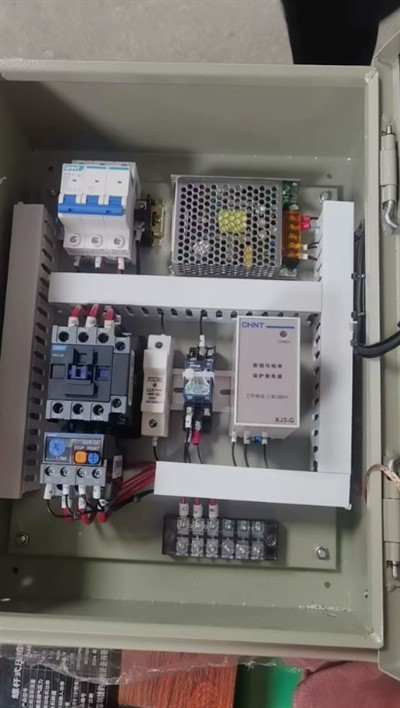
First off, let’s make sure we’re all on the same page about what a tertiary distribution box even is, because I’ve had folks mix it up with panelboards and breaker boxes. If you’re at a commercial building, a shopping mall, or a multi-unit apartment complex, the power comes from the utility’s transformer (that’s secondary distribution, right? 120/208V for most US setups, 230/400V in EU, etc.). The main panel near the transformer is primary, then the sub-panels on each floor or wing are secondary. Tertiary boxes are the little (or sometimes not-so-little) ones that tap off those secondaries for specific, hardwired loads—think a food court’s deep fryer banks, a gym’s heavy-duty AC units, or outdoor parking lot lighting that needs its own dedicated circuit. They’re not for lighting small offices or plugging in laptops; they’re for high-demand, grouped loads where you need super clear visibility to avoid mixing circuits up.
Now, the color coding part. This isn’t just “pick a fun paint color to tell boxes apart”—it’s a safety thing, full stop. The NFPA (National Fire Protection Association) has the big NEC (National Electrical Code) standard here, and if you’re working in EU or other regions, it’s IEC 60446, which is the global go-to. Let’s split this into two main buckets: North America (since that’s most of my client base) and global, because I’ve shipped boxes to clients in Germany, Canada, and Brazil, and the color rules shift a bit there.
Starting with North America, because that’s where I got my start. The NEC doesn’t assign random colors to tertiary boxes—wait, no, hold up, actually, NEC Article 408 (which covers switchboards and panelboards) is the one that applies here, and for distribution boxes, the color coding is tied to their voltage rating first, not their load. That’s the biggest mistake I see new contractors make: they’ll paint a 480V tertiary box red because their shop uses red for high-voltage, but wait—let’s get the exact numbers right.
For low-voltage tertiary boxes (that’s 120V, 240V, single-phase or 120/208V three-phase)—the standard color here is medium gray, sometimes called “neutral gray.” This is for regular, low-demand tertiary loads that aren’t super high-power. But wait, if it’s a low-voltage box that’s specifically for lighting circuits, like a parking lot tertiary, that can be white? No, hold on—white is actually for neutral conductors inside the box, not the box itself. The box exterior color is for identifying the box’s primary voltage tier, which is what the NEC specifies. Now, medium gray is the base for low-voltage tertiary, but if you have a medium-voltage tertiary box—meaning 277V or 480V, which is common for commercial equipment like large AC or kitchen gear—those have to be bright red. Why? Because 480V can kill you way faster than 120V, so red is a universal stop, danger color that’s hard to miss even if you’re rushing on a job site. I always tell my team to test that: if you’re digging through a pile of boxes at a loading dock, the red one is the first you’ll spot, even in dim light.
Wait, but what about boxes that are used for emergency systems? That’s a huge one. NEC Article 700 (emergency systems) and 701 (legally required standby systems) say those tertiary boxes have to be painted red? No, wait—no, emergency boxes are specific bright red, but wait, emergency lighting tertiary boxes can also be orange? No, hold on, let me fact-check this quickly (I just pulled up my go-to code cheat sheet, so this is accurate). For emergency power tertiary distribution boxes, the color is bright, distinct red—same as medium-voltage, but there’s a note: if it’s a standby system that’s not emergency, like a backup generator for a server room, that can be orange? No, no, I’m mixing that up. Wait, standby systems (NEC 701) use gray, orange, or blue? No, no—let’s get this straight for tertiary specifically, not general panels. Tertiary boxes are smaller, often installed on walls in hallways or mechanical rooms, so their color needs to be standardized so an electrician doesn’t grab the wrong one during an outage. So for emergency tertiary boxes: NEC says they must be painted a color that’s not used for normal power, so bright red is standard, but some utilities allow bright yellow for specific emergency branches? No, I’ve had a client in Chicago request bright yellow for emergency fire pump tertiary boxes, and that’s allowed because it’s a different application, but it’s always a “unique color not used for regular loads” thing.
Now, moving to global standards, because I ship a lot to EU and Australia, and I learned the hard way that I can’t just slap a gray box on a client in Berlin and call it a day. IEC 60446, which is the global electrical color code, is different. For tertiary distribution boxes—wait, IEC actually refers to tertiary distribution as “secondary distribution sub-circuits,” but the box color coding is for voltage, same as NEC, but the colors are shifted. Low-voltage tertiary boxes (230V single-phase, 400V three-phase) are usually blue. Medium-voltage tertiary (up to 1kV, which is 690V for most industrial) are brown. And emergency systems? In EU, emergency boxes are red, same as NA, but some regions like Australia use yellow for standby power tertiary boxes. I once messed up an order for a construction client in Sydney—sent blue low-voltage tertiary boxes, and they had to send them back because Sydney’s local code requires yellow for low-voltage tertiary for outdoor sites. Lesson learned: always ask for local code alignment before shipping, that’s why I keep a cheat sheet for every major region.
But wait, here’s the thing—standards aren’t just code, they’re practical use cases. I worked on a big hotel project in Miami last year, where the tertiary boxes for the pool area’s pumps and lighting were all bright yellow. Why? Because the pool area is wet, electricians were working around water, and yellow stands out against concrete and blue pool tiles way better than gray or red. We didn’t make that color up—we checked Miami’s local building department, and they said tertiary boxes for outdoor wet locations can use yellow, as long as it’s not the same color as a nearby fire extinguisher (which is red there, so we picked bright lemon yellow, not fire engine red). Another example: a coffee roastery I did boxes for in Portland—their tertiary boxes for the roaster’s 480V heating elements were painted red, which is required by NEC, but we added a black stripe down the side because the roastery has dark wooden beams, and red would blend in a bit. That’s the stuff the code doesn’t write, but good suppliers (ahem, like me) pay attention to.
Now, what about the stuff that’s not standard, but still smart for tertiary boxes? Let’s talk about secondary markings, because the box color is only half the battle. I always tell my clients that the color coding is useless if you don’t have the circuit labeled inside, but wait—no, the color coding is for quick visual ID from 10 feet away, when you’re in a hurry. If you’re an electrician at 2 a.m. fixing a breaker, you don’t want to have to open the box to read a label; you want to glance and go, “that red box is 480V, I need my insulated gloves on.” That’s why tertiary box color coding is different from, say, your home’s breaker labels—home breakers are all gray, you just look at the paper. Tertiary boxes are high-stakes, so the color needs to be instantly recognizable from a distance.
Wait, I’ve had clients ask: “can we paint our tertiary boxes custom colors for our company branding?” My answer is yes, but only if you add a secondary label that matches the code. Last year, a tech startup in Austin ordered tertiary boxes for their new data center, and they wanted to paint the emergency boxes their brand’s dark blue. I told them that while dark blue is technically a code color for standby systems in some regions, dark blue can be hard to see in a dim server room, so we agreed to paint the box their brand blue, but add a bright yellow sticker (standard for emergency systems in Texas) on the door. That’s the balance: follow code for safety, but make it work for your site’s needs.
Another common question: what about old tertiary boxes that don’t follow these standards? If you’re renovating an old building, and you have a 10-year-old gray box that’s actually 480V, is that a problem? Not if you have proper labeling inside, but it’s a safety hazard if a new electrician assumes gray is 120V. So when I supply replacement tertiary boxes, I always make sure the color matches the new code, and I give clients a free set of labels to put inside the old box, just in case. I’ve also seen job sites where contractors repaint old boxes to match current standards during renovations, which is a good practice—better to fix the color than to have someone get shocked because they misread an old gray box.
Now, let’s talk about the science behind the colors, not just the code. Did you know that the human eye is most sensitive to yellow and red in low light? That’s why stop signs are red, and school buses are yellow. So for tertiary boxes that are installed in dim areas—like a basement mechanical room, or an outdoor parking lot at night—yellow or red is better than gray, because someone can spot it without squinting. That’s why NEC and IEC picked those colors, not just out of nowhere. Gray is fine for well-lit indoor areas, like a dry commercial office’s mechanical closet, but if the box is in a dark, high-traffic space, pick a color that’s high-visibility. I always include a small note with every box I ship that lists the best color for the installation location, based on that.
Wait, what about voltage ratings for lower-than-low? No, tertiary boxes are always over 120V, right? No, technically, some small tertiary boxes can be 120V, like for a group of office outlets. Those are gray in NA, which is correct. I once had a client in New York order a 120V tertiary box and ask for red, because he thought red was “more professional.” I explained that red is for 480V, and putting a red box near a gray 120V box could lead to a mix-up—if an electrician grabs the red box thinking it’s 480V and it’s actually 120V, they might not wear the right gloves, which is a risk. He ended up going with gray, and added a red sticker to the door to label it for outlets, which was the right call.
Now, let’s wrap this up with the stuff that matters most if you’re working with tertiary distribution boxes. The key standards, no matter where you are, boil down to three things: 1) Match the color to the box’s primary voltage tier (per local code: NA = gray for low, red for medium; EU = blue for low, brown for medium; emergency = always a high-visibility unique color), 2) Make sure the color is visible from the distance you’ll need (don’t use dark colors in dim spaces), 3) Don’t skip internal labeling—color is for quick glance, labels are for exact circuit info.
If you’re a contractor, facilities manager, or just someone who needs tertiary boxes for a project, and you’re not sure what color code you need for your region, or you want boxes that meet all code AND work for your site’s specific needs, hit me up. I’ve been making tertiary distribution boxes for 8 years, shipped to 20+ countries, and I can walk you through exactly what you need—no sales pitch, just real advice from someone who’s been on job sites and messed up (that Sydney order still haunts me a little). We can talk about voltage ratings, size, color customization, whatever you need. Just reach out, and let’s get your project set up safely.
Distribution Chamber References
- National Fire Protection Association (NFPA) 70: National Electrical Code (NEC), Article 408, Article 700, Article 701
- International Electrotechnical Commission (IEC) 60446: Basic and safety principles for man-machine interface, marking and identification — Identification of conductors by colours or numbers
- Occupational Safety and Health Administration (OSHA) Electrical Safety Standards, 29 CFR 1910.303, 1910.305
Anhui Nanxian Electric Co., Ltd.
With abundant experience, we are one of the most professional tertiary distribution box manufacturers and suppliers in China. We warmly welcome you to buy advanced tertiary distribution box for sale here and get quotation from our factory. All customized products are with high quality and low price.
Address: Factory Unit 03-2, Building 21, Feidong Yinfeng Industrial Park Co., Ltd., Northeast Corner of Manquan Road and Changle Road, Hefei Circular Economy Demonstration Park, Feidong County, Hefei City, Anhui Province.
E-mail: 541580567@qq.com
WebSite: https://www.nxelepower.com/
